Wild and Scenic Vector Illustrations: A Practical Guide to Versatile Nature Assets
In the realm of digital design, the demand for high-quality, nature-inspired graphics continues to grow. Designers often find themselves searching for assets that balance artistic detail with technical flexibility. Wild and Scenic Vector Illustrations represents a comprehensive collection tailored to meet these needs, offering a robust toolkit for professionals and hobbyists alike. This resource is not merely a set of images; it is a structured library designed to streamline workflows across various media, from print to digital interfaces.
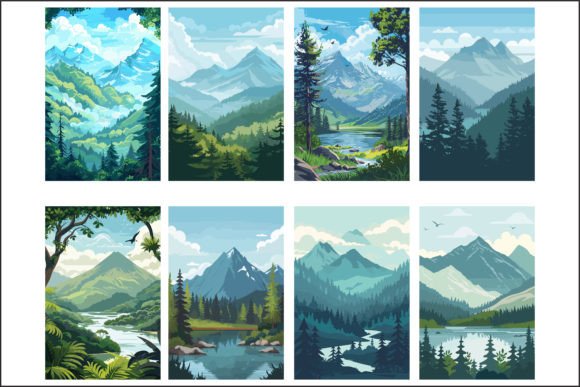
The core value of this collection lies in its format diversity. Unlike many standard stock image packs that offer only raster files, this bundle provides three distinct formats for each of the eight featured themes. Users receive 8 transparent PNG files for immediate web use, 8 high-resolution JPG files suitable for photography-style layouts, and most critically, 8 editable color EPS files. The inclusion of editable vector data is what distinguishes this resource from generic clip art, allowing for true customization without quality loss.
Understanding the Technical Advantage of Editable Vectors
When evaluating graphic resources, the file format is often the deciding factor between a usable asset and a dead end. Raster images, such as standard JPEGs or PNGs, are composed of pixels. While they look excellent at specific sizes, scaling them up results in pixelation and blurriness. In contrast, the editable color EPS files included in the Wild and Scenic package are built on mathematical paths. This means the artwork can be scaled to the size of a postage stamp or a billboard without any degradation in clarity.
The ability to edit these vectors offers significant advantages over static alternatives. With raster-based nature illustrations, changing the color of a leaf or adjusting the shape of a mountain range requires complex photo editing techniques that often compromise the image integrity. With the vector files provided here, designers can open the file in compatible software, select individual elements, and modify colors, strokes, or shapes instantly. This level of control is essential for branding projects where consistency and adaptation are paramount.
However, it is important to weigh the tradeoffs. Working with vector files requires specific software knowledge, typically Adobe Illustrator, CorelDRAW, or similar vector editors. For users who lack access to these tools or prefer a drag-and-drop workflow, the PNG and JPG versions serve as excellent fallback options. These rasterized versions retain the high resolution needed for most print and web applications, ensuring that even those who cannot edit the source files still benefit from the visual quality of the collection.
Comparing Styles: Realism vs. Stylization
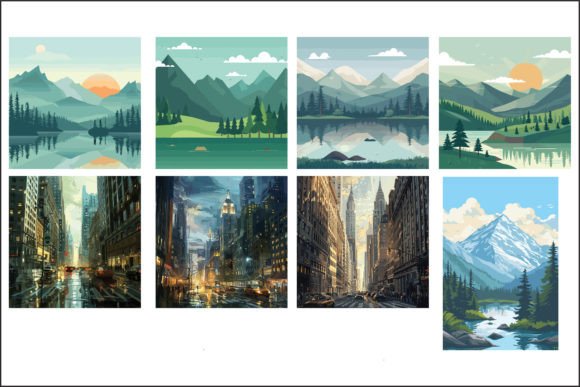
Nature-themed design assets generally fall into two categories: hyper-realistic photography and stylized illustration. Wild and Scenic Vector Illustrations occupies a unique middle ground. It moves away from the stiff, flat aesthetics of early 2000s clip art but does not necessarily mimic the exact texture of a photograph. Instead, it utilizes clean lines and thoughtful shading to create imagery that feels organic yet modern.
When comparing this style to pure photographic assets, the illustrated approach often integrates better into graphic-heavy designs. A photograph of a forest might clash with bold typography or geometric patterns due to its visual complexity. An illustrated version, however, can be simplified or recolored to match the surrounding design elements seamlessly. Conversely, when compared to abstract geometric nature patterns, these illustrations retain more character and emotional resonance. They convey the "wild" aspect of the theme through recognizable forms while maintaining the structural discipline required for professional layouts.
This stylistic balance makes the collection particularly effective for brands that want to evoke a sense of adventure or environmental consciousness without appearing cliché. The distinct visual language allows the illustrations to stand out in crowded marketplaces, whether used for a hiking apparel line or an eco-friendly tech startup.
Practical Applications Across Design Categories
The versatility of the Wild and Scenic Vector Illustrations extends beyond simple decoration. The variety of formats ensures that the assets can be deployed across a wide spectrum of design challenges. Below are key areas where these files demonstrate their utility.
T-Shirt and Apparel Designs
Apparel design demands graphics that can withstand the rigors of printing processes like screen printing or direct-to-garment (DTG). The vector nature of the EPS files is ideal here. Designers can trace complex animal silhouettes or landscape details directly onto shirt templates. The transparency of the PNG files also aids in previewing how the design sits against different fabric colors. Whether creating a nature-inspired t-shirt featuring detailed flora or a minimalist hoodie with abstract geometric patterns derived from natural shapes, these assets provide the necessary foundation. Furthermore, combining vector text with these graphics allows for strong typographic statements that remain legible at any scale.
Branding and Logos
For businesses seeking to establish a unique identity, logo design is critical. The clean, scalable nature of the vector files makes them perfect for crafting logos that work equally well on a business card and a storefront sign. The collection allows for the creation of cohesive icon sets, which are increasingly vital for app development and website navigation. Unlike using a pre-made logo found online, adapting these illustrations ensures exclusivity. A conservation organization, for example, could take a vector wolf illustration, simplify its geometry, and integrate it into a badge-style logo, creating a brand mark that is both meaningful and legally distinct.
Print Products and Stationery
In the world of print, resolution is non-negotiable. The high-resolution JPG files included in the pack ensure that posters, wall art, and canvas prints appear crisp and vibrant. Detailed vector illustrations translate beautifully into framed art, adding a touch of sophistication to interior spaces. Beyond large formats, these assets are equally effective for smaller stationery items. Greeting cards, invitations, and custom business cards benefit from the intricate details that vectors preserve. A wedding invitation featuring a scenic landscape border or a corporate letterhead with a subtle wildlife motif can elevate the perceived value of the printed material.
Web and Mobile Design
Digital environments require assets that load quickly and render sharply on various screen densities. The transparent PNG files are optimized for web use, making them ideal for hero images, background textures, and web banners. Because they are transparent, they blend seamlessly with dynamic website backgrounds without awkward white boxes. Additionally, the vector components can be converted into SVG format, which is the gold standard for responsive web design. This ensures that UI elements like icons, buttons, and infographics scale cleanly across smartphones, tablets, and desktop monitors. For infographics specifically, the ability to break down complex scenes into editable parts allows designers to highlight specific data points within a natural context.
Evaluating Suitability: When to Use This Resource
While Wild and Scenic Vector Illustrations offers broad applicability, it is not a one-size-fits-all solution. Understanding when to utilize this resource versus other options is key to efficient project management.
Choose this resource when:
- You need a consistent visual theme across multiple deliverables (e.g., a logo, social media kit, and packaging).
- Customization is required, such as changing color palettes to match specific brand guidelines.
- Scalability is a priority, particularly for large-format printing or variable screen sizes.
- You are working on projects involving nature, wildlife, travel, or outdoor lifestyle themes.
Consider alternatives when:
- The project requires photorealistic textures that only a camera can capture (e.g., a magazine spread focusing on the tactile feel of bark or fur).
- The budget does not allow for vector editing software, and you strictly need quick, uneditable drop-in images (though the PNGs provided mitigate this somewhat).
- The design aesthetic is strictly abstract or non-representational, requiring generative art tools rather than illustrative assets.
Decision Factors for Designers
When selecting graphic assets, the decision often comes down to the balance between time investment and creative control. Using stock photos is fast but limits customization. Creating illustrations from scratch offers total control but is time-consuming. Wild and Scenic Vector Illustrations strikes a practical balance. It reduces the initial creation time significantly while retaining the flexibility to tweak the final output.
For freelancers and agencies, this efficiency translates to faster turnaround times and higher client satisfaction. The ability to present a concept, make rapid adjustments based on feedback, and deliver high-quality final files in multiple formats streamlines the entire production pipeline. Moreover, having a library of eight distinct themes allows for variety within a single campaign, preventing visual fatigue without the need to source disparate assets from different vendors.
Ultimately, the value of these illustrations lies in their adaptability. They serve as a robust starting point that empowers designers to execute their vision with precision. Whether the goal is to create a striking poster, a functional mobile interface, or a memorable brand identity, the combination of editable vectors and high-resolution rasters provides the necessary tools to succeed. By understanding the strengths and limitations of these formats, designers can make informed choices that enhance their workflow and elevate the quality of their final products.