Evaluating the SVG Hand-draw Arrows Vector Pattern for Modern Design Projects
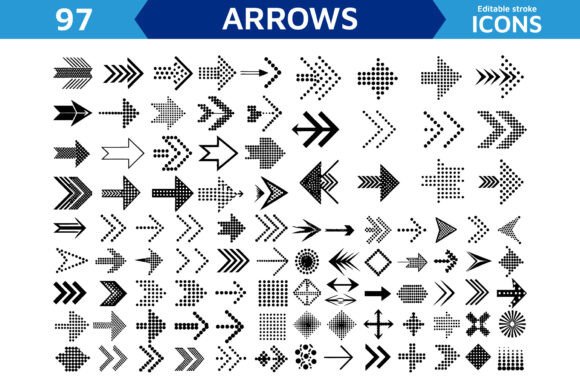
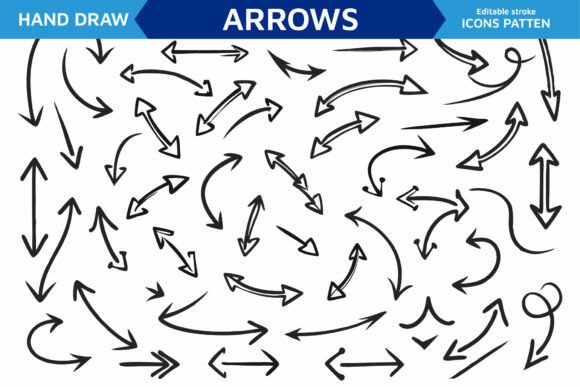
In the landscape of digital illustration and user interface design, the choice of directional elements often dictates the overall tone of a project. The SVG Hand-draw Arrows Vector Pattern represents a specific aesthetic category that diverges from rigid, geometric precision in favor of organic, human-centric lines. This collection, featuring a set of hand-drawn arrows isolated on a white background, offers designers a versatile toolkit ranging from rough doodles to refined brush strokes, circles, and outlines. For professionals aged 20 to 50 who are weighing options for web design, UI elements, or print-on-demand stores, understanding the nuances of this resource is essential before integrating it into a workflow.
The primary distinction of this vector pattern lies in its texture and imperfection. Unlike standard geometric arrows generated by software tools like Adobe Illustrator's shape builder or basic pen tool shortcuts, these assets mimic the variability of a physical drawing instrument. When evaluating resources for a creative project, one must consider whether the goal is absolute clarity or expressive guidance. The SVG Hand-draw Arrows Vector Pattern excels in scenarios where a friendly, approachable, or artistic vibe is required, making it a strong candidate for modern design projects that aim to reduce visual stiffness.
Aesthetic Versatility and Design Context
When comparing arrow styles, the market generally divides into two camps: the sterile and the organic. Geometric arrows offer high legibility and are often preferred in technical documentation, safety signage, or data-heavy dashboards where ambiguity must be eliminated. However, in branding, storytelling, and lifestyle-oriented web design, these same geometric forms can feel cold or impersonal. The SVG Hand-draw Arrows Vector Pattern bridges this gap by providing directional cues that retain human character.
This versatility is evident in the variety included within the set. From rough doodles that suggest a brainstorming session to smoother brush strokes that imply motion and flow, the collection allows for nuanced communication. For instance, an "undo" icon rendered with a jagged, sketchy line feels more intuitive for a casual productivity app than a sharp, metallic icon might. Similarly, symbols depicting growth or forward momentum benefit from the dynamic energy inherent in hand-drawn strokes. These elements are not merely decorative; they serve as functional signifiers that guide the user's eye without disrupting the visual harmony of the layout.
Technical Specifications and Workflow Integration
A critical factor in choosing vector resources is file compatibility. The SVG Hand-draw Arrows Vector Pattern is distributed across multiple formats, ensuring adaptability across different stages of production. The inclusion of an Adobe Illustrator (.ai) file provides native editing capabilities for professional graphic designers, allowing for color changes, stroke adjustments, and path modifications directly within the industry-standard software. The Encapsulated PostScript (.eps) format serves as a robust legacy option for print workflows, maintaining high resolution regardless of scaling.
For web developers and UI/UX designers, the Scalable Vector Graphics (.svg) file is particularly valuable. SVGs are resolution-independent and lightweight, making them ideal for responsive web design where performance is paramount. Unlike raster images, these vectors do not pixelate when scaled up for large hero banners or down for mobile icons. Additionally, the Drawing Exchange Format (.dxf) opens doors for those working in CAD environments or laser cutting applications, expanding the utility beyond digital screens. Finally, the Portable Network Graphics (.png) files offer a straightforward solution for quick mockups or use cases where vector editing is unnecessary.
While many free resources on the internet offer limited formats—often just PNGs or low-resolution JPEGs—the comprehensive nature of this package reduces friction in the design process. It eliminates the need for third-party conversion tools, which can sometimes introduce artifacts or errors in path data. For agencies managing multiple client projects, having a single source file that covers all output requirements streamlines asset management significantly.
Comparing Formats: When to Use Which File Type
- AI and EPS: Best for finalizing print materials, large-scale signage, or complex illustrations requiring deep customization.
- SVG: Essential for web integration, interactive UI elements, and applications requiring crisp rendering at any screen size.
- DXF: Ideal for manufacturing processes, such as vinyl cutting for stickers or engraving.
- PNG: Suitable for rapid prototyping, presentations, or social media graphics where immediate placement is needed.
Strategic Fit and Limitations
Despite its strengths, the SVG Hand-draw Arrows Vector Pattern is not a universal solution. Evaluating its fit requires a clear understanding of the project's constraints. In contexts demanding strict adherence to corporate identity guidelines that prioritize minimalism and uniformity, the irregularity of hand-drawn lines may clash with established brand standards. For example, a financial institution or a medical device manufacturer might find the "rough doodle" style too informal, potentially undermining perceptions of reliability and precision.
Furthermore, while the isolation on a white background provides flexibility, it does require careful consideration of the background environment. Hand-drawn elements rely heavily on contrast. If placed over a busy or textured background, the subtle variations in stroke width and opacity might get lost. Designers must ensure sufficient negative space or utilize layer blending modes to maintain visibility. This contrasts with solid, bold geometric arrows that often remain legible even in cluttered compositions.
Another tradeoff involves scalability in terms of detail. While vectors scale infinitely, extremely small renderings of intricate brush strokes can sometimes appear muddy if the stroke weight is not adjusted. A designer using this set for a mobile app icon needs to verify that the chosen arrow style remains distinct at 24x24 pixels. Simpler outlines from the set may perform better here than complex, multi-stroke brush variants.
Decision Factors for Creative Professionals
When deciding whether to invest in this specific vector pattern or seek alternatives, several decision factors come into play. First, consider the target audience. Demographics skewing younger or interested in creative industries often respond positively to the authenticity of hand-drawn aesthetics. Conversely, older demographics or B2B sectors may prefer traditional, clean lines. Second, evaluate the volume of customization required. If a project demands hundreds of unique directional indicators, a custom service might be more efficient than adapting a pre-made set.
For those operating a print-on-demand store, the quality of the source file is non-negotiable. Low-quality clip art can ruin a product's perceived value. The SVG Hand-draw Arrows Vector Pattern, with its high-fidelity vector paths, ensures that prints on t-shirts, mugs, or posters remain crisp. However, if the design concept relies on hyper-realistic photography or 3D renders, these 2D vector arrows might feel out of place unless carefully integrated.
Ultimately, the choice between this pattern and other resources depends on the balance between efficiency and uniqueness. Stock libraries offer thousands of options, but they often lack cohesion. A curated set like this one ensures stylistic consistency across various elements, saving time on matching disparate assets. For designers seeking to boost their creative projects with a cohesive, human touch, this collection offers a practical middle ground between the rigidity of geometric shapes and the unpredictability of fully custom illustrations.
Customization and Future-Proofing Assets
While the provided set is comprehensive, the evolving nature of design trends means that specific needs may arise that standard packs cannot meet. For clients requiring bespoke directional symbols that align perfectly with a proprietary logo or a unique brand voice, ordering a custom design is a viable alternative. This approach allows for the creation of arrows tailored to specific dimensions, stroke weights, or thematic elements that generic sets might miss.
Whether utilizing the ready-to-use SVG Hand-draw Arrows Vector Pattern or commissioning a custom piece, the key is alignment with the project's core message. Directional elements should enhance navigation and storytelling, not distract from it. By carefully selecting the right style—be it a rough circle, a precise outline, or a dynamic brush stroke—designers can create interfaces and illustrations that feel both intentional and inviting. The availability of multiple file formats further ensures that these assets remain useful throughout the lifecycle of a project, from initial concept to final production.