Abstract Geometric Line Art Collection: A Practical Guide for Designers
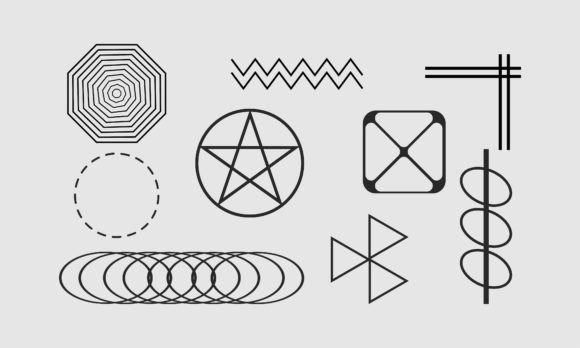
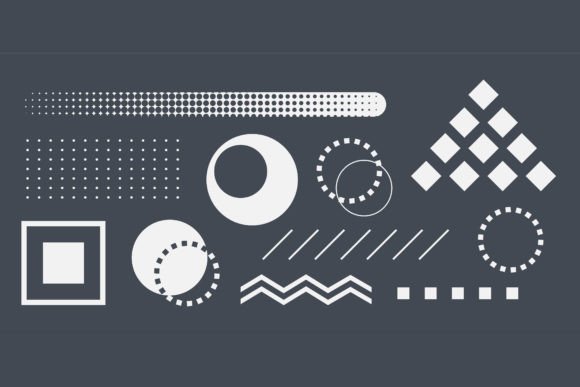
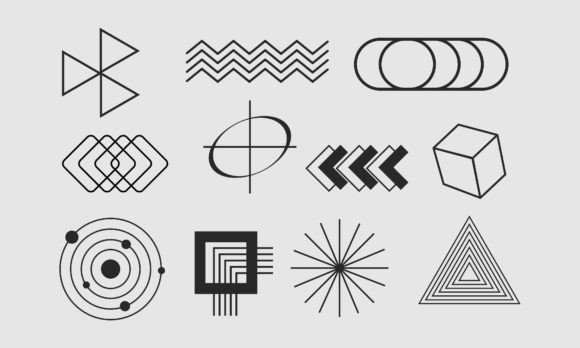
In the fast-paced world of digital creation, efficiency often dictates success. Professionals ranging from freelance graphic designers to in-house marketing teams constantly seek resources that streamline their workflow without compromising aesthetic quality. The Abstract Geometric Line Art Collection represents a significant asset in this pursuit. This vector illustration features an abstract collection of geometric line art, showcasing a diverse range of shapes including triangles, circles, cubes, and more. Each design is crafted with clean, sharp lines, offering a modern and minimalist aesthetic ideal for graphic designers, web developers, and digital artists. These versatile elements are perfect for use in logos, posters, backgrounds, and various creative projects. The high-quality vector format ensures easy customization and scalability, making it a valuable resource for any design toolkit.
Understanding how to integrate such a collection into a broader production process transforms it from a simple set of images into a strategic tool. It is not merely about selecting a shape; it is about leveraging geometry to solve visual communication problems quickly and effectively. Whether you are establishing a brand identity, creating social media assets, or designing a user interface, the principles behind these geometric forms can anchor your project in consistency and clarity.
Strategic Integration into the Design Workflow
The value of the Abstract Geometric Line Art Collection extends beyond its visual appeal; it lies in its application within the lifecycle of a project. Effective integration begins during the planning phase, before a single pixel is placed on the canvas. When defining the scope of a new campaign or product launch, identifying the need for modular, scalable graphics is crucial. This collection serves as a foundational layer that can be adapted to fit various stages of development.
Pre-Production and Conceptualization
Before diving into complex rendering or photography, designers often rely on wireframes and mood boards. Geometric line art is exceptionally useful here. The clean, sharp lines allow for rapid prototyping of layouts. For instance, when sketching out a poster layout, a designer can pull a triangle or cube from the collection to represent a focal point. This helps in balancing composition and determining negative space without getting bogged down by intricate details too early. It acts as a placeholder that maintains structural integrity while the creative direction is still fluid.
Active Production and Asset Creation
During the execution phase, the versatility of the collection becomes paramount. Because the assets are in a high-quality vector format, they offer easy customization and scalability. This is critical when a single design element must appear across multiple mediums—from a small mobile app icon to a large outdoor billboard. Unlike raster images that lose resolution when enlarged, vector-based geometric shapes remain crisp at any size. This eliminates the need for re-creating assets for different formats, significantly reducing turnaround time.
Designers can manipulate the stroke weight, color, and opacity of these shapes to match specific brand guidelines. If a project requires a shift from a monochromatic scheme to a vibrant gradient, the underlying structure remains intact. This adaptability ensures that the Abstract Geometric Line Art Collection interacts seamlessly with other tools in the software suite, such as masking, blending modes, and typography layers.
Optimizing for Consistency and Brand Identity
One of the most challenging aspects of maintaining a cohesive brand voice is visual consistency. Inconsistent imagery can dilute a brand's message and confuse the audience. Using a curated collection like this one provides a standardized visual language. By restricting the palette of shapes to those found in the collection—triangles, circles, cubes—teams can ensure that all output shares a common DNA.
This standardization is particularly beneficial for agencies managing multiple clients or internal teams working on different facets of a single product. When everyone draws from the same library of geometric primitives, the resulting collateral feels unified. It creates a subconscious sense of order and professionalism. Furthermore, the minimalist aesthetic inherent in these designs aligns well with current trends favoring simplicity and clarity, ensuring the work remains relevant over time.
Practical Use Cases Across Industries
The utility of this collection spans various sectors, proving its worth as a universal design resource. Understanding specific use cases helps professionals maximize the return on investment for acquiring and implementing these assets.
- Corporate Branding and Logos: Many modern startups and tech companies prefer geometric abstraction to convey innovation and stability. The cubes and interlocking lines found in this collection are frequently used to construct memorable, scalable logos that communicate complexity through simplicity.
- Web Development and UI/UX: Web developers often struggle to find lightweight graphics that load quickly but look professional. Vector line art is inherently lightweight. These shapes can serve as section dividers, background patterns, or interactive icons, enhancing the user experience without impacting site performance.
- Marketing Materials and Posters: For event promotions or product launches, bold geometric backgrounds can make text pop. The clean lines provide a structured backdrop that guides the viewer's eye toward key information, improving readability and engagement.
- Packaging Design: In the retail sector, packaging needs to stand out on crowded shelves. Abstract geometric patterns can add texture and depth to flat surfaces, elevating the perceived value of a product without requiring expensive printing techniques.
Workflow Efficiency and Technical Considerations
To truly benefit from the Abstract Geometric Line Art Collection, users must consider the technical environment in which they operate. Compatibility with industry-standard software is non-negotiable. Since these are vector files, they should open natively in applications like Adobe Illustrator, Affinity Designer, or Sketch. This ensures that every node and path is editable, allowing for precise adjustments.
Organization and File Management
A common pitfall in design workflows is poor file organization. When importing a large collection of assets, it is essential to establish a logical folder structure immediately. Grouping shapes by type (e.g., "Triangles," "Circles," "Complex Forms") or by intended use (e.g., "Logos," "Backgrounds") streamlines the retrieval process. This organizational discipline saves hours of searching during tight deadlines.
Customization Techniques
While the collection offers ready-to-use designs, the real power lies in modification. Designers should feel empowered to break apart the vectors, merge paths, and apply effects. For example, taking a simple circle and expanding its stroke to create a thick ring, then combining it with a triangle, can yield a unique symbol that feels bespoke. This level of control ensures that the final output does not look generic, even if it originated from a shared library.
Long-Term Viability
Investing in high-quality vector assets is a long-term strategy. Trends in graphic design evolve, but the fundamental principles of geometry do not. Triangles and circles will remain effective compositional tools for decades. By building a library of these adaptable elements, businesses future-proof their visual identity. They can update colors or slight stylistic nuances to match current trends without needing to commission entirely new artwork from scratch.
Collaboration and Communication
In a collaborative environment, clear communication is vital. When presenting concepts to stakeholders or clients, using recognizable geometric forms can bridge the gap between abstract ideas and concrete visuals. A cube might represent "foundation" or "structure," while intersecting lines could symbolize "connection" or "network." Leveraging the Abstract Geometric Line Art Collection allows teams to visualize these metaphors instantly.
Furthermore, when handing off designs to developers or print vendors, the vector format simplifies the process. Developers can extract SVG code directly from the files for web implementation, ensuring pixel-perfect rendering on all devices. Print vendors appreciate the scalability, knowing that the artwork will not suffer from compression artifacts or blurriness when printed at large scales. This reduces back-and-forth revisions and accelerates the approval cycle.
Conclusion
The Abstract Geometric Line Art Collection is more than a bundle of illustrations; it is a functional component of a robust design ecosystem. By offering a diverse range of shapes including triangles, circles, cubes, and more, it empowers creators to execute their vision with speed and precision. Its clean, sharp lines and modern, minimalist aesthetic cater to the evolving demands of the digital landscape. From the initial planning stages to the final delivery, these versatile elements support logos, posters, backgrounds, and various creative projects.
For professionals aged 20–50 who prioritize productivity and quality, integrating this collection into their toolkit is a strategic move. It enhances efficiency, ensures consistency, and provides the flexibility needed to adapt to changing project requirements. As the high-quality vector format ensures easy customization and scalability, it stands as a valuable resource for any design toolkit, enabling users to focus on creativity rather than technical limitations. Embracing these geometric fundamentals allows for a smoother workflow, better outcomes, and a more polished final product.